The Western internet has worked itself into a state about onsen. Whole blog posts spend two thousand words on rules — naked! tattoos! never wash hair in the water! — without ever quite saying that an onsen is, in practice, a public bath, and almost everyone there is just trying to get warm and fall half-asleep.
The whole etiquette stack reduces to one principle: the soaking water is shared and stays clean, so wash before you get in. That's the rule. Everything else is comfort and minor convention. Below: the five corollaries, plus what tattoos actually look like in 2026 (mostly fine).
How-to
Six steps to a first onsen
~ 45 minutes totalRyokan or public sento¥500–2,500 entry
1
Locker, yukata, towel — get the kit right first
Before any water touches you: shoes off in the entrance, clothes in a wicker basket or coin locker, yukata robe back on if you're leaving the bath area to walk through the ryokan. You get two towels — a small white modesty towel that goes with you to the bath, and a larger drying towel that stays in your locker. Don't mix them up.
The small towel comes with you. The big one stays in the locker.
Tip: Wedding rings and watches off too — the mineral water tarnishes silver and stains some leather straps within minutes.
2
Rinse first. This is the only rule that really matters.
Sit on a low wooden stool at the washing station, rinse your whole body with the handheld shower, soap up, rinse again. Do this before you step into the bath. The soaking water is shared and pristine — entering it dirty is the actual offence. The rest of onsen etiquette is forgivable; this part isn't.
Sit, rinse, soap, rinse again. Then you're welcome in the bath.
3
Soak slowly. The water is hotter than you think.
Most onsen sit between 40–43°C. Step in to your knees first, sit down to your hips, then your shoulders. Stay 5–10 minutes max for the first soak; longer if you're used to it. Get out before you feel woozy — fainting in an onsen is the only way to actually embarrass yourself, and it happens to overconfident first-timers all the time.
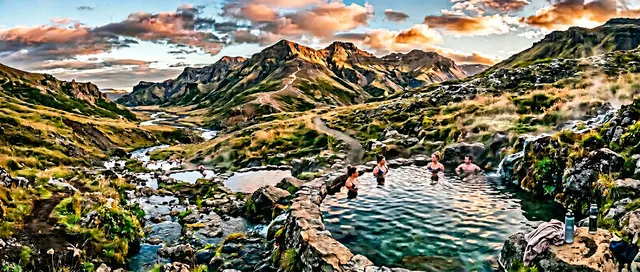
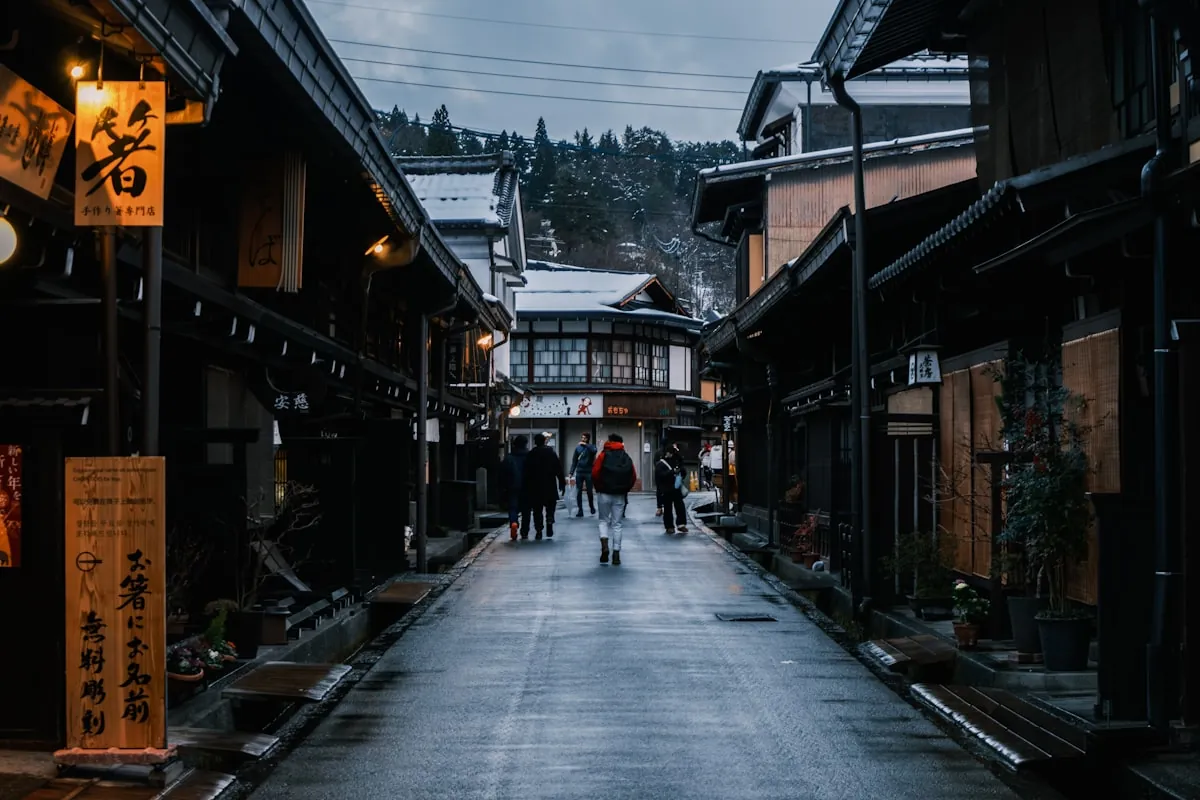
Rotenburo at a mountain ryokan in winter. The cold air on your face while your body is in 42°C water is the entire point.
Tip: The small towel never touches the water. Fold it on top of your head while soaking — that's the classic onsen pose, and it's practical (cools your face, holds your hair back).
4
Tattoos: the panic is overblown
I have a half-sleeve on my left arm. I've never been turned away at any onsen, ryokan, or sento in any of my Japan trips. That's my experience — not a guarantee. Some traditional bath houses still post "no tattoos" signs and the older generation of staff sometimes enforces them, but the trend across 2024–26 is firmly the other way. Hot-spring towns like Hakone, Kinosaki, and Kusatsu now have tattoo-friendly maps, and most ryokan offer kashikiri (private bath rentals, ¥2,000–4,000 for 50 minutes) which sidestep the question entirely.
After 8–10 minutes in 42°C water, your body is hot all the way through. Sit on the edge or in a colder pool for a minute or two before walking out. Drink water. The light-headed feeling that follows a long bath is real — most ryokan have a vending machine in the changing area selling cold milk, water, or amazake. The cold milk thing is a tradition, not a marketing stunt.
A few things worth knowing
No swimsuits, no exceptions. Onsen are gender-segregated and naked. The exceptions are some konyoku (mixed-gender) baths in remote prefectures and "spa resort" pools that aren't real onsen. If a place lets you wear a swimsuit, you're in a swimming pool with hot water.
Hair etiquette is real but mild. Long hair goes up — a small clip, the modesty towel folded on your head, or a hair tie. The water shouldn't carry hair around. Don't make a production of it.
Drink water before and after. The body sweats heavily in 42°C water and you don't notice. Most ryokan have water dispensers at the bath entrance for a reason. Skip the dispenser, faint two hours later.
The cold milk after the bath is genuinely worth it. Coffee milk (kohi gyunyu) or strawberry milk (ichigo gyunyu) from the changing-room vending machine, drunk standing on the tatami, hand on hip — that's the post-bath ritual. Looks goofy, feels great.
If you're menstruating or feeling sick, skip it. The shared-water principle still holds. Most ryokan have private kashikiri options if you want to soak anyway.
One rule, plus a soak
Wash before you get in. That's the entire summary. The rest is body temperature management, light social convention, and the real-time feeling of being warm to the bone in a stone bath under a snowy roof while everyone around you politely ignores everyone. The first onsen is never as scary as the build-up. Pick a small ryokan, do it once, and the country opens up.